Need Help? Contact us at support@nvmos.com | (920) 249-7744

Brake Lines

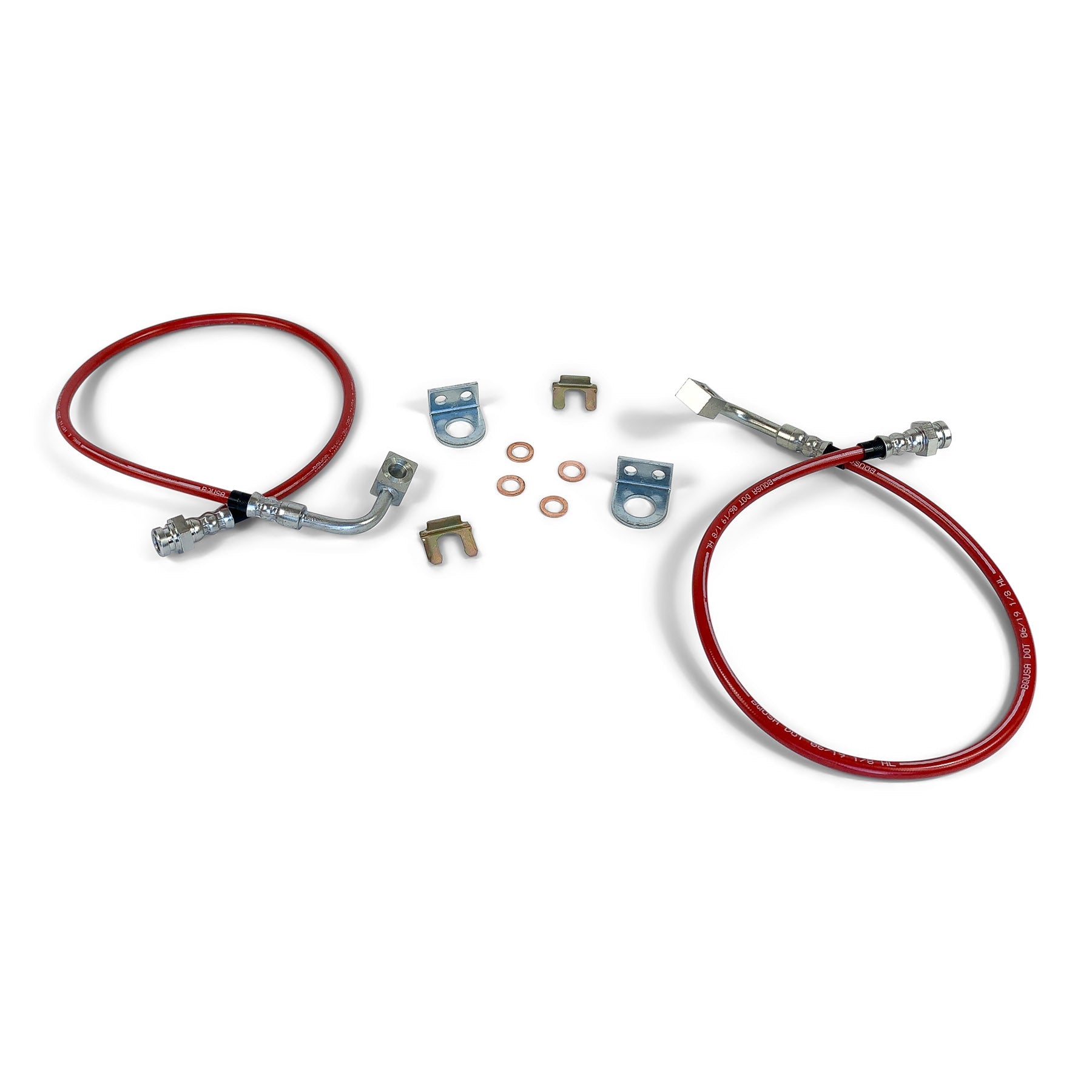
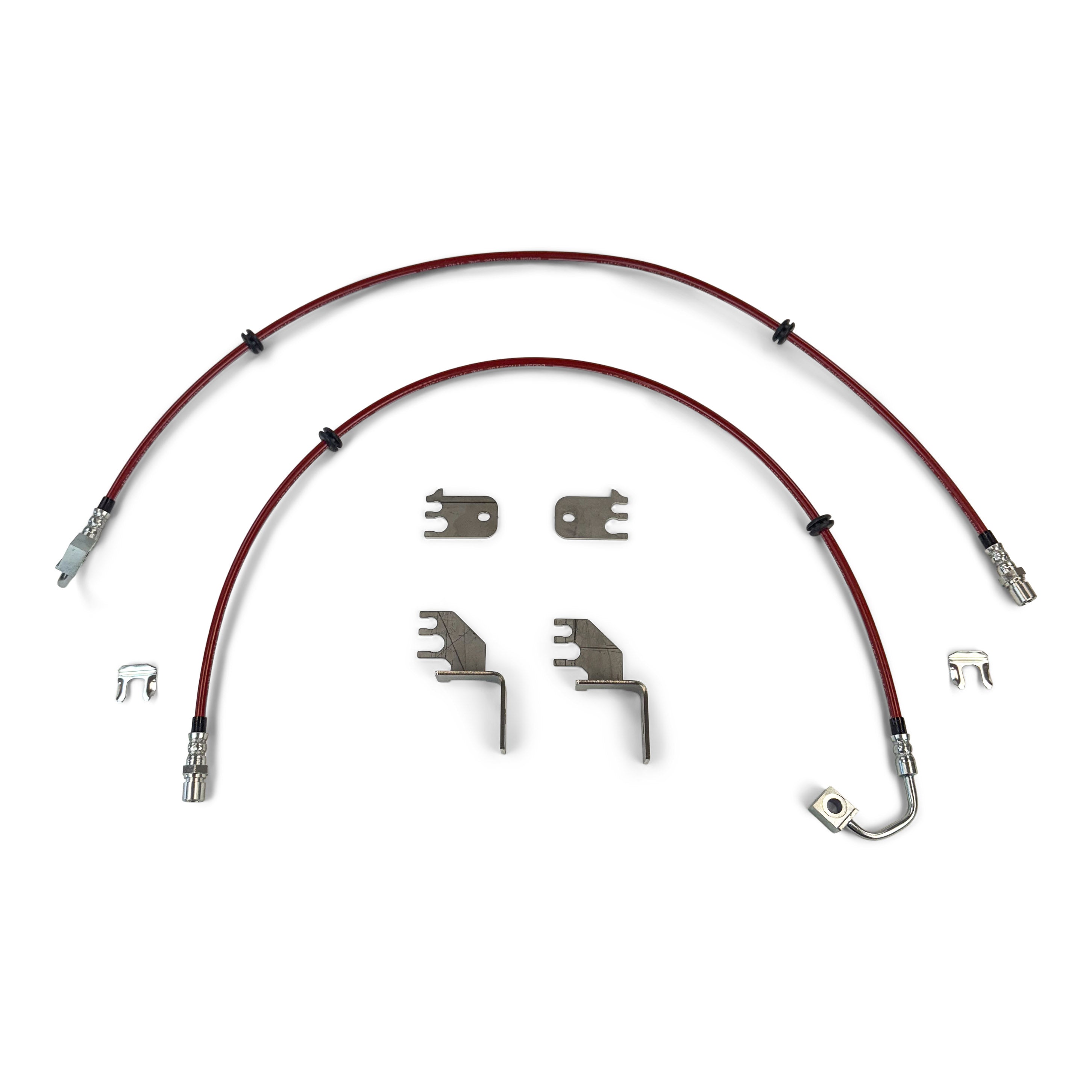
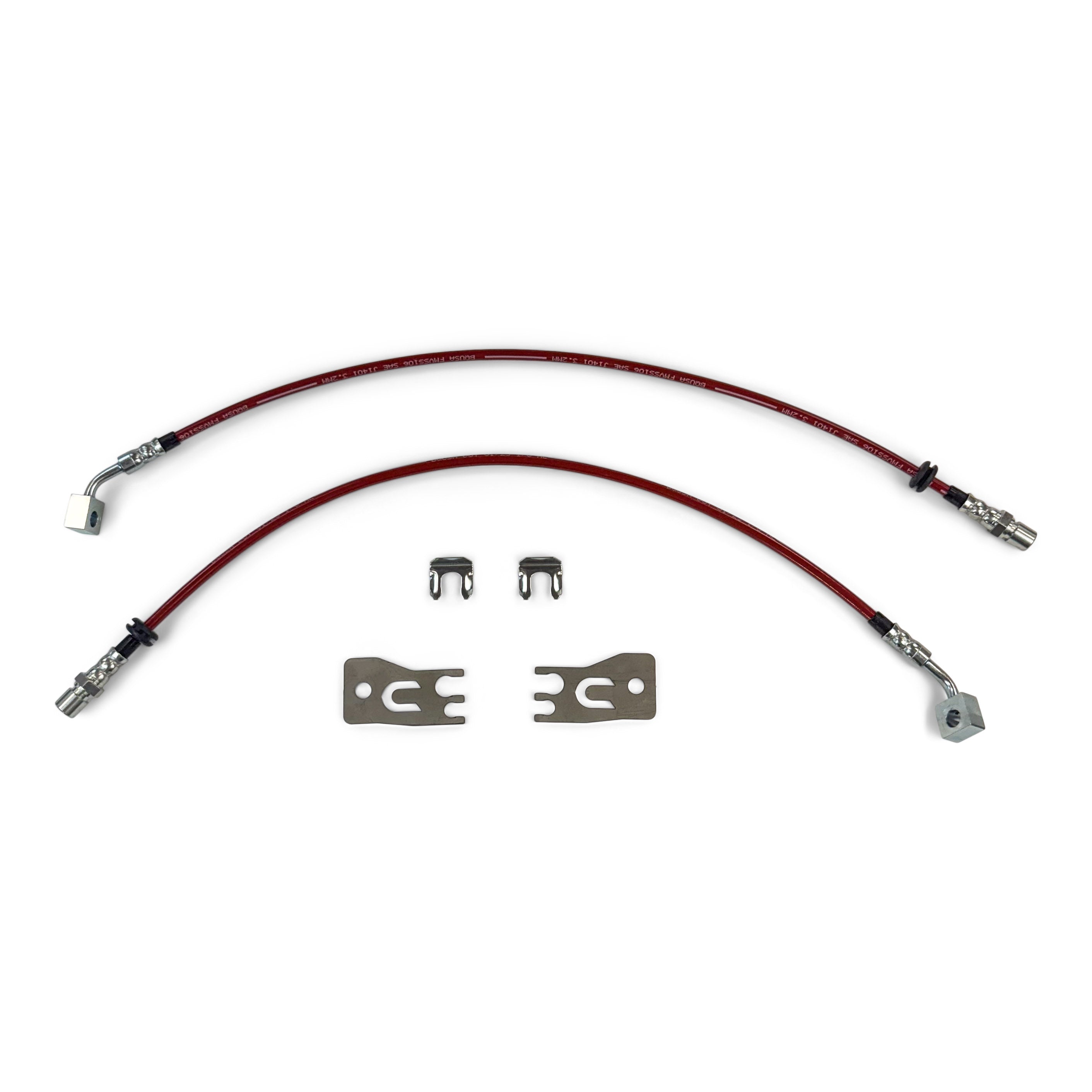
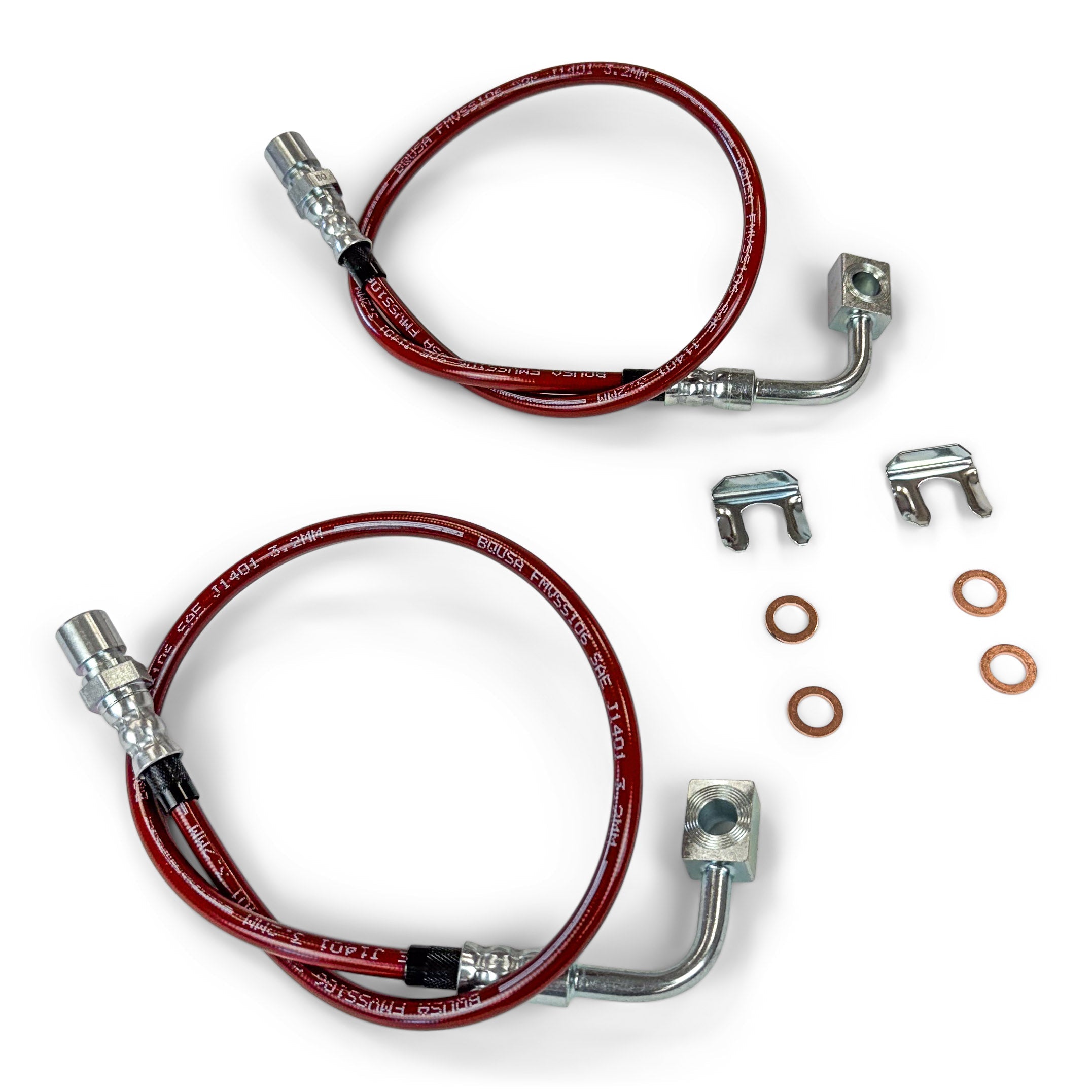
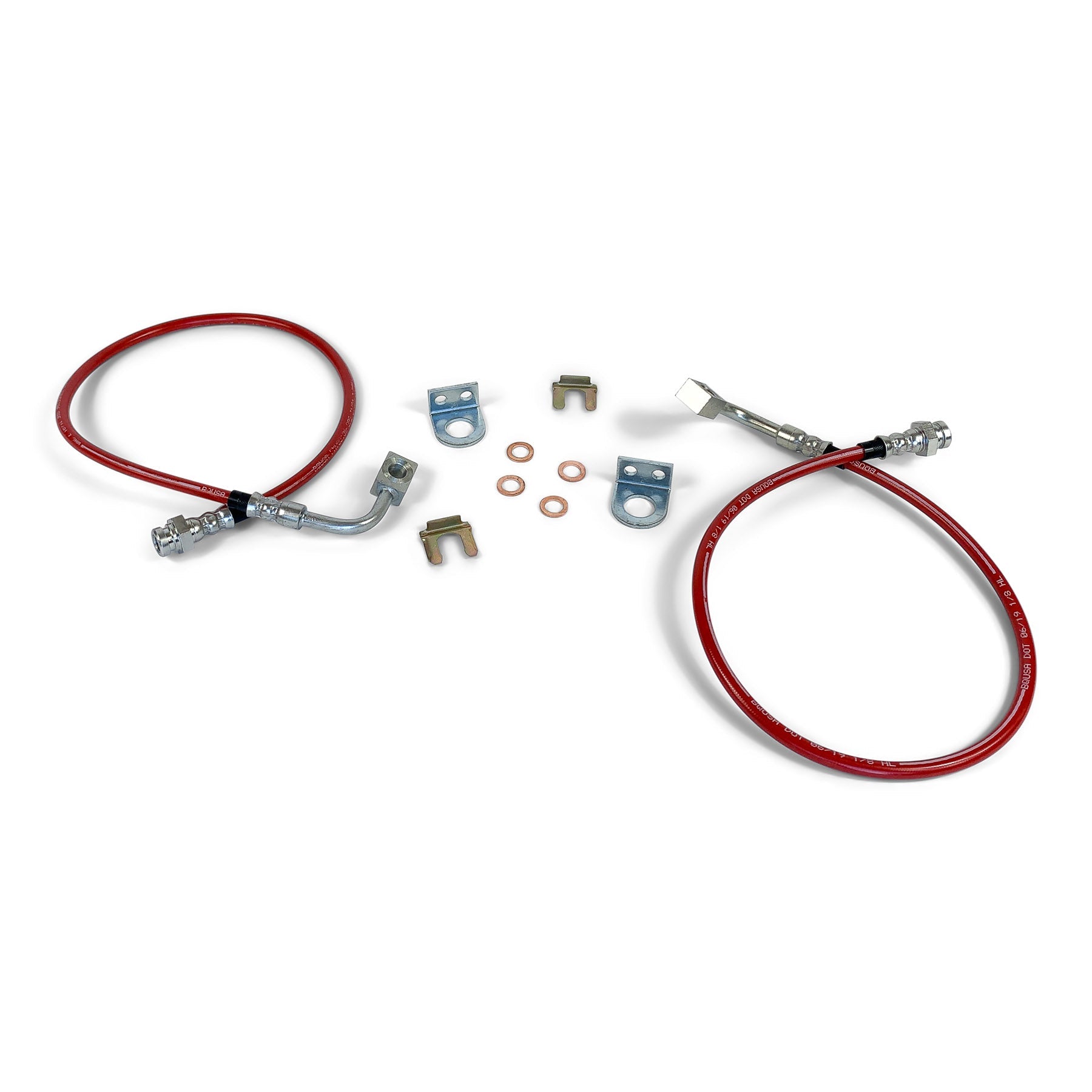
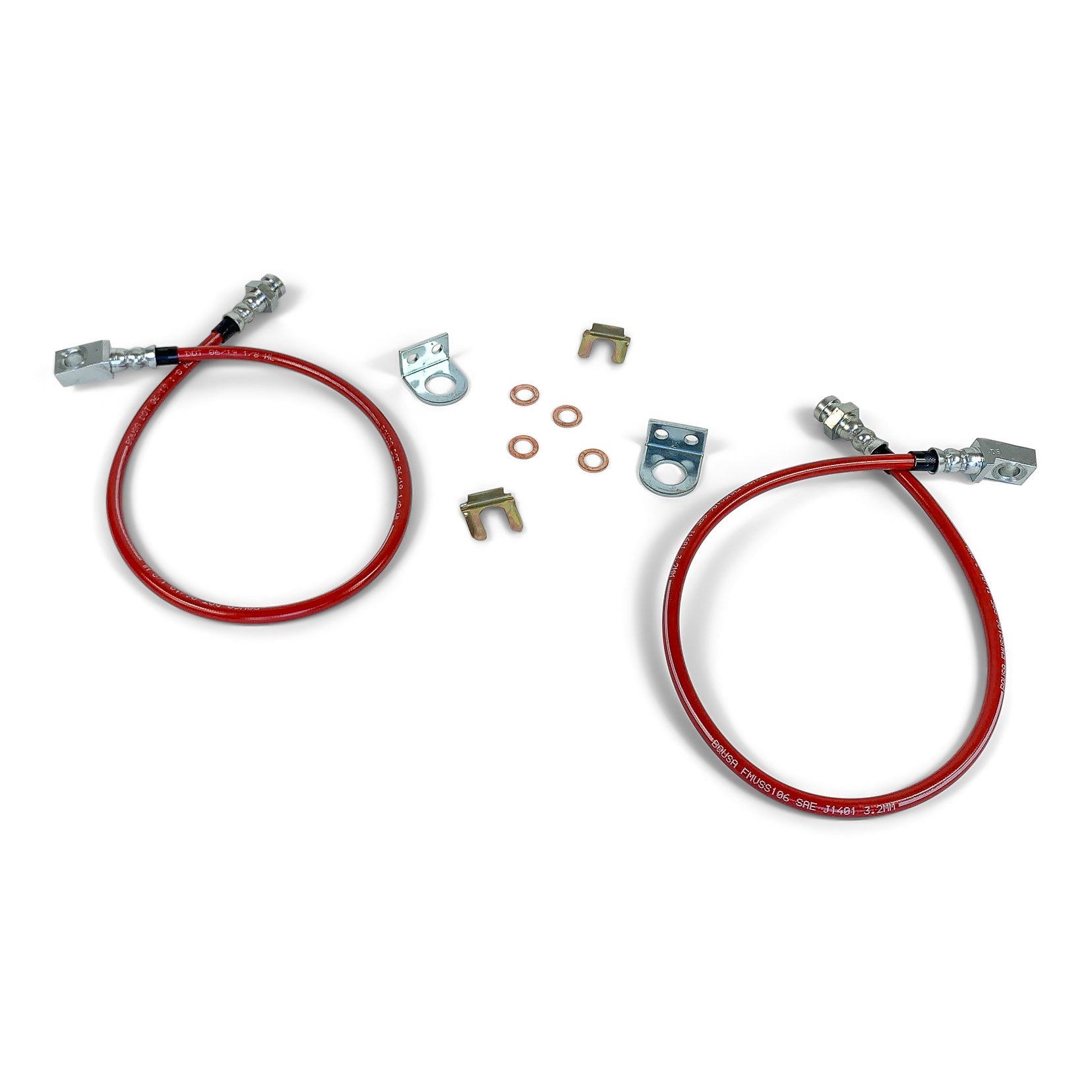
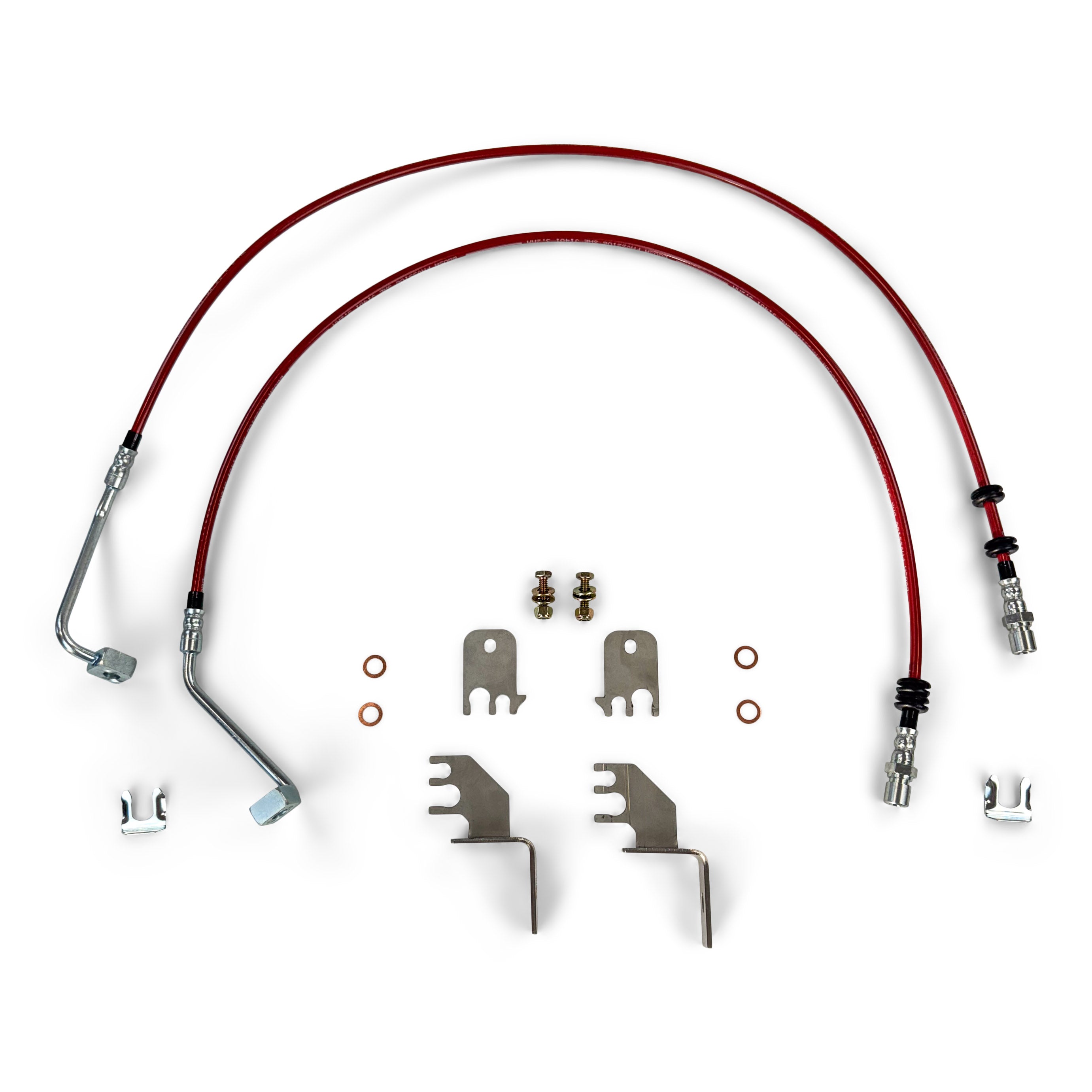
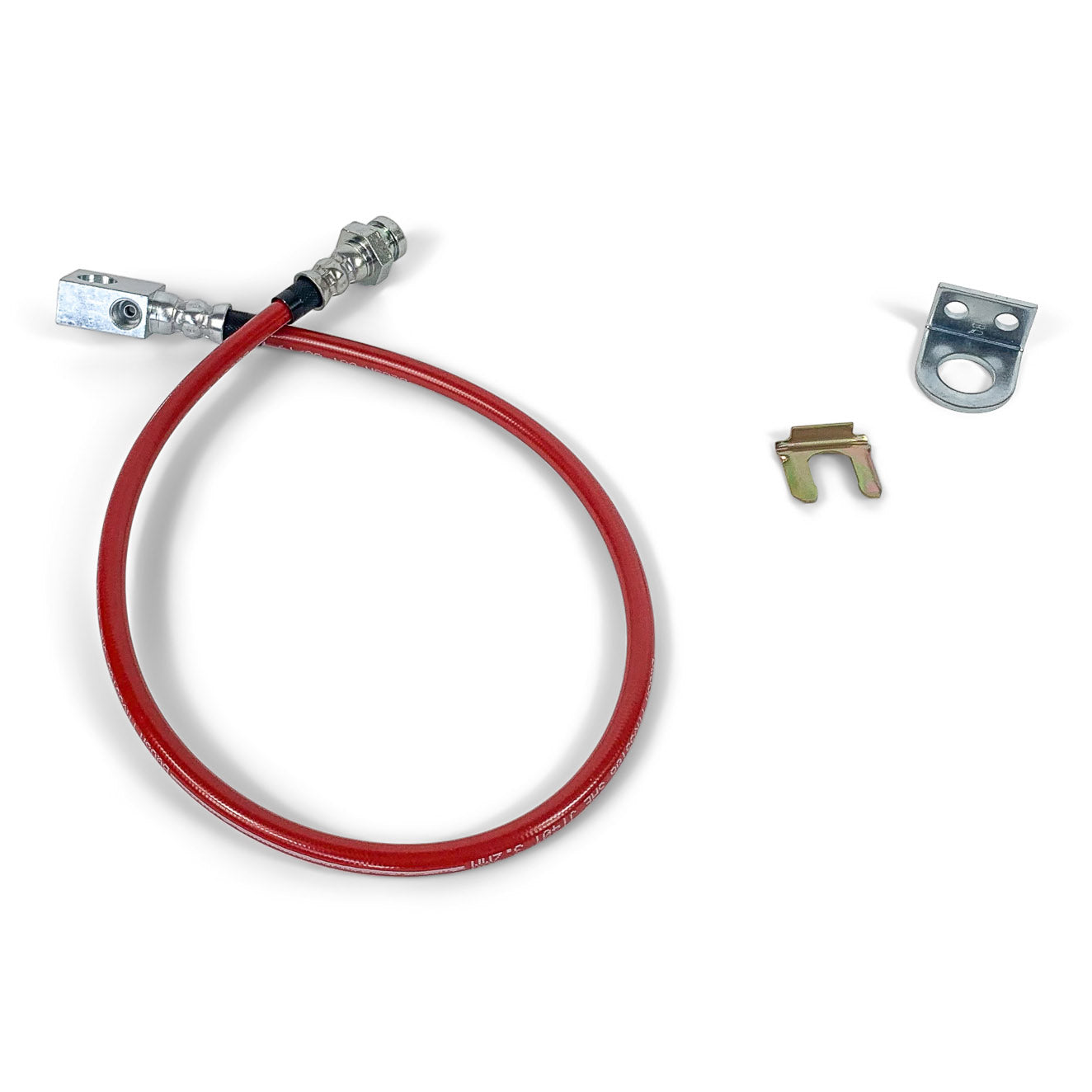
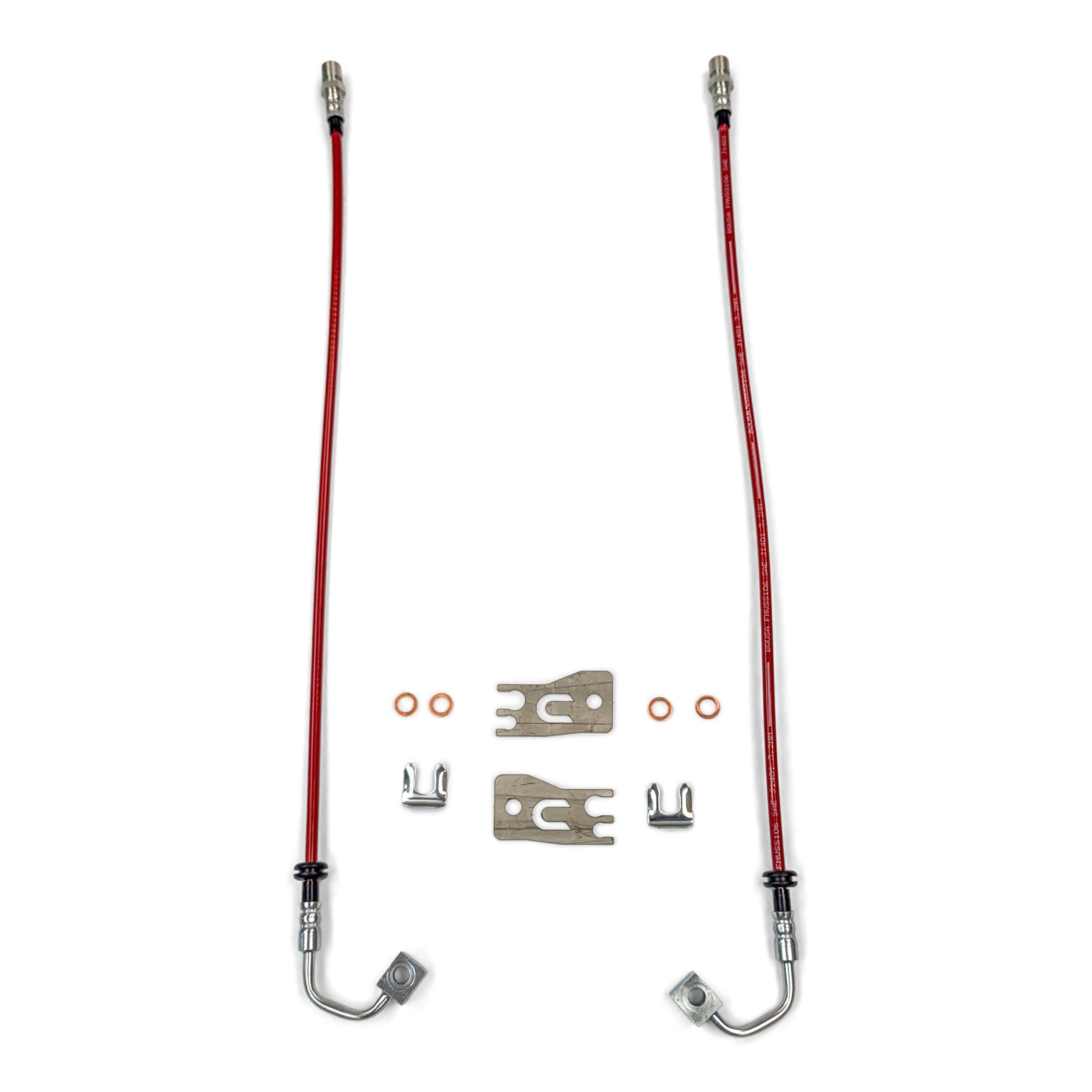
Brake lines earn their keep at two extremes: full droop, where a short hose goes taut and tears, and rocky trails, where an exposed hose meets constant abrasion. The lines here restore slack after a lift and shrug off the scuffing that kills rubber, and every listing is filtered by year, make, and model. If a lift is going on soon, sort the lines out before the first flex test finds the problem for you.
Buy for your actual travel, not the lift sticker

The number that matters isn't the lift height on the box — it's how far your axle can now droop. As a starting point, extended lines typically run longer than stock by roughly the amount of lift, but longer shocks and different bump stops change the math. The honest method: flex the truck to full droop and measure what the hose actually has to reach. Too short tears; too long slaps around and snags brush, so extra length demands deliberate routing and solid anchors. If you're ordering lines alongside new suspension, make it one decision — the kit's travel numbers tell you what the lines need to be.

Stainless braided versus rubber, without the sales pitch

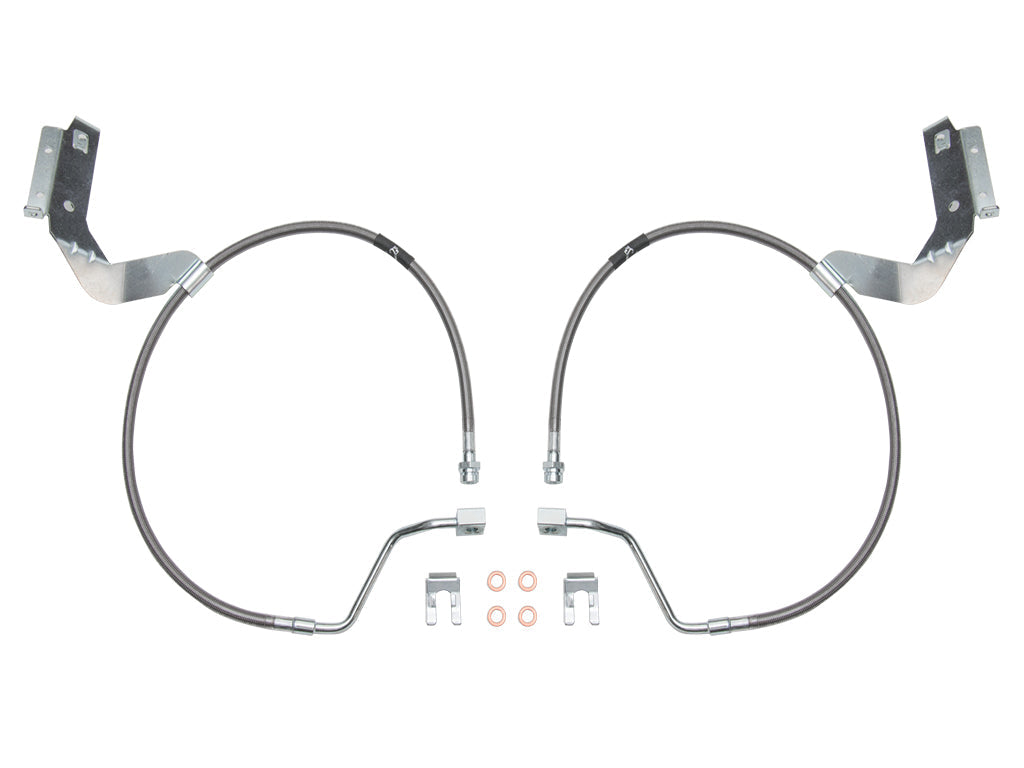
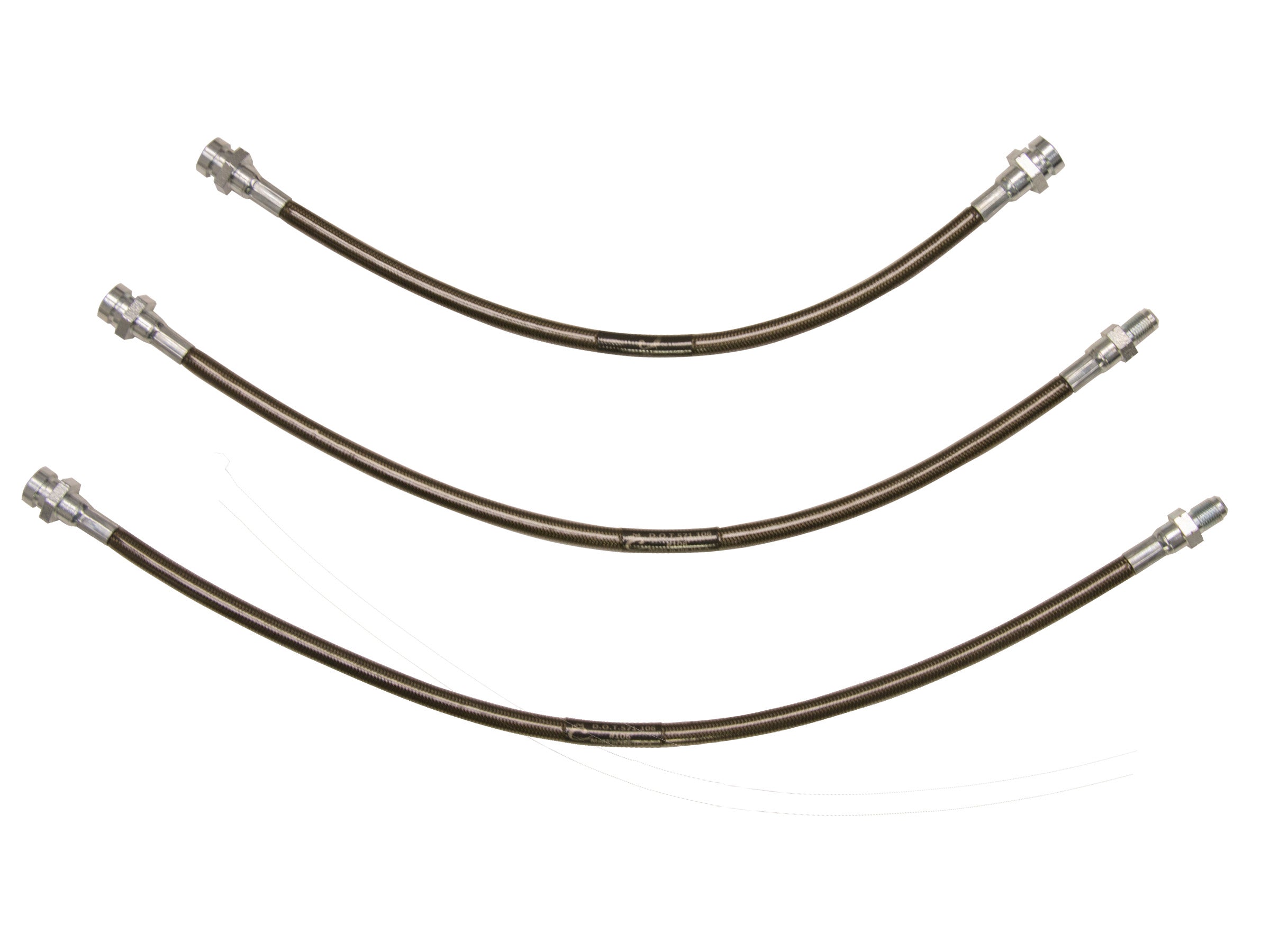
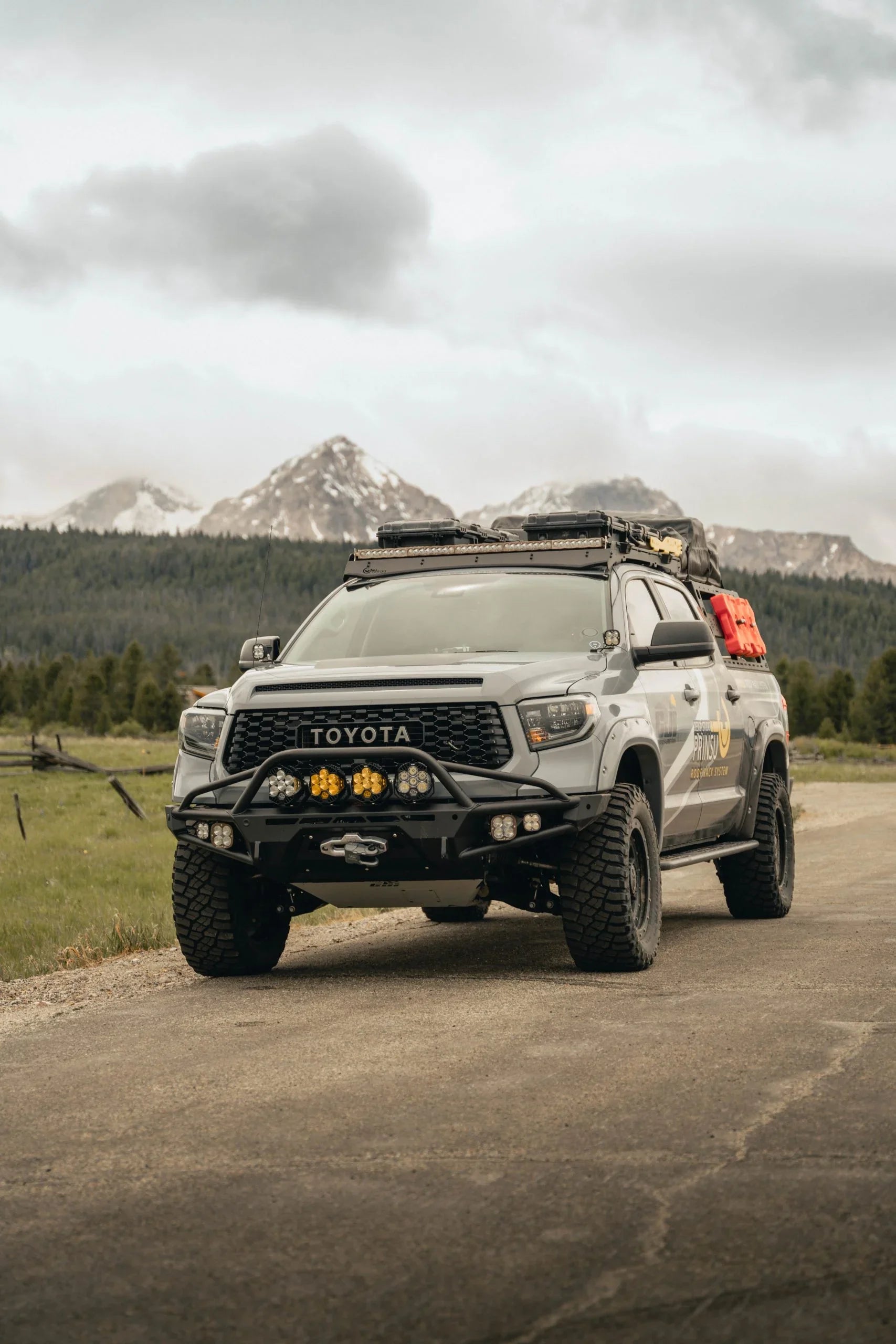
Braided stainless lines resist the abrasion that eats rubber hoses on rocky trails, and because they expand less under pressure, the pedal feels firmer and more consistent — worth having on a long descent with a loaded rig. The tradeoff nobody mentions: the braid hides the hose inside it, so damage is harder to spot at a glance, which makes a protective outer coating and regular hands-on inspection more important, not less. Factory rubber is genuinely good at flexing for years; it's the cutting and chafing off-road that ends it early on a hard-used 4Runner or anything else that lives around rocks.

Install like brakes matter, because they do

New lines mean opening the hydraulic system: bleed every corner until the fluid runs clean, confirm a firm pedal, torque the fittings, and check for weeping after the first heat cycle. Route the lines away from rotating parts, exhaust heat, and anywhere the tire travels at full lock and full stuff. Then re-inspect after the first real trail day — routing and fasteners reveal their opinions under vibration. This is a focused corner of our drivetrain range because brake parts reward specificity: filter by year, make, and model and buy the line built for your truck, not a universal approximation.

Brake Lines FAQs

Why switch to stainless braided brake lines for off-road use?

Two reasons: armor and pedal feel. The stainless braid resists the rock rash and brush abrasion that destroy rubber hoses, and reduced expansion under pressure gives a firmer, more consistent pedal — noticeable on long, loaded descents. They're not mandatory equipment; they're the upgrade that makes sense once your trails involve rock, or your factory hoses are old enough to deserve suspicion.

Do I have to bleed the brakes after installing new lines?

Yes — every time the hydraulic system is opened. Air in the lines means a soft, long pedal, so bleed all four corners until the fluid runs clear and bubble-free, confirm a firm pedal before driving, and check every fitting for weeping after a short test drive. Buy enough fresh fluid for the whole job; letting the reservoir run low mid-bleed just pulls in more air.

How much longer than stock should extended brake lines be?

Roughly the height of your lift is the usual starting point, but travel is the real spec — longer shocks add droop beyond what the lift number implies. Measure at full droop when you can, or buy lines built for your specific lift and platform, which is exactly what the year/make/model filter is for. Excess length isn't free, either: it needs routing and anchoring to stay out of trouble.