





Leveling Kit vs Lift Kit: Which One Your Truck Needs
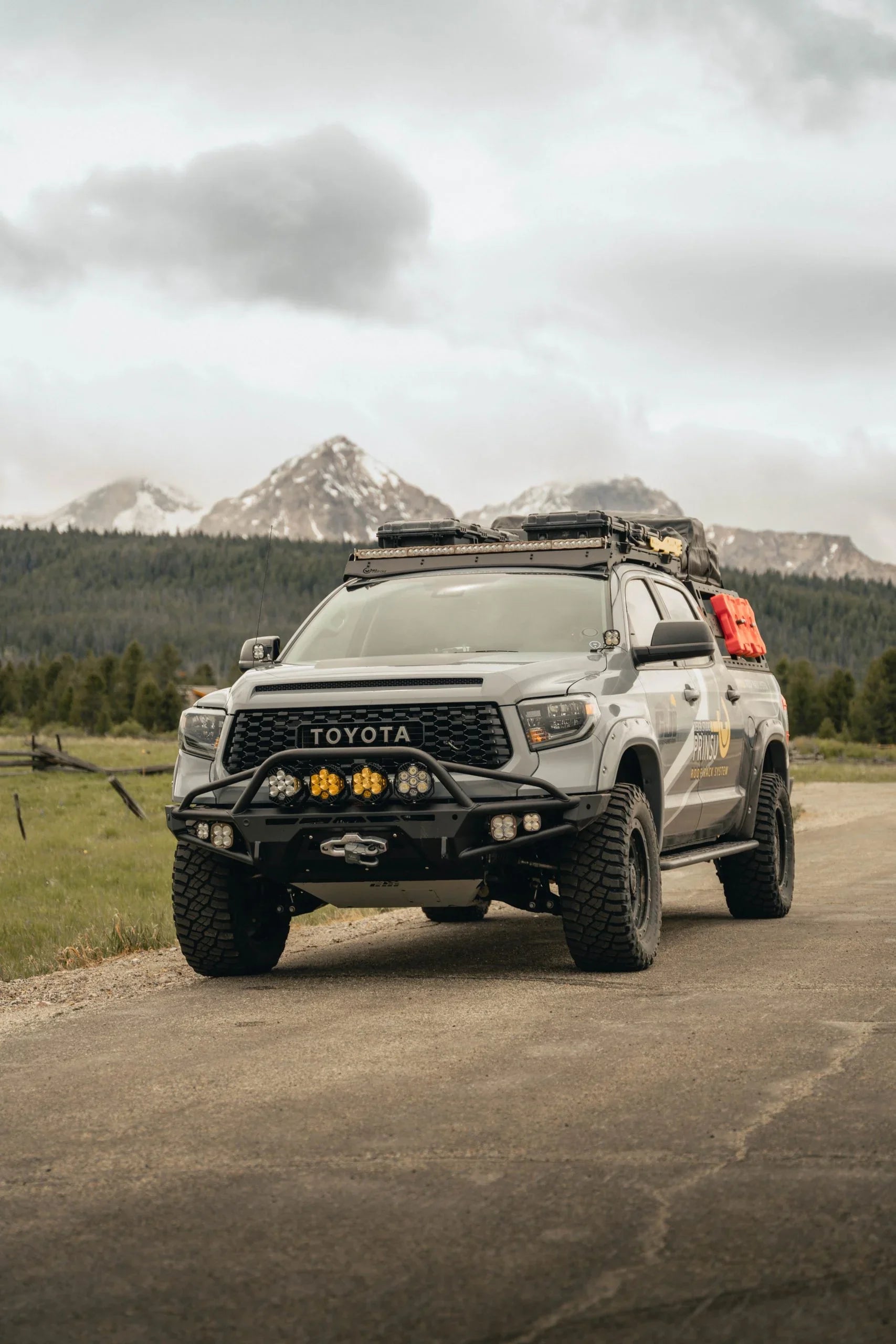
Most new trucks and plenty of SUVs leave the factory sitting nose-down. You can fix that with a leveling kit or go further with a lift kit. Both raise the truck and make room for bigger tires, and both change things you don't see in the showroom: CV angles, alignment, ride and sometimes warranty conversations.
Short answer: A leveling kit raises only the front of the truck, usually 1.5 to 3 inches, to cancel the factory nose-down rake and make room for a modestly larger tire. A lift kit raises the front and rear, from spacer lifts to full suspension systems with new springs, shocks and control arms. Buy a leveling kit if you want a level stance and one tire size up. Buy a lift kit if you want more ground clearance, bigger tires or better off-road performance.
Why do trucks sit nose-down from the factory?
The forward tilt is called rake, and it's deliberate. Pickups are built to carry weight in the bed and on the hitch, and a loaded rear squats. Building the truck tail-high means it sits close to level when it's working, with the headlights aimed properly and the steering and braking balanced.
If your truck rarely carries much, rake is just a look, and it leaves the front wheel wells emptier than the rear. TeraFlex says its 1.5 inch JL spacer kit corrects the factory rake, and ReadyLIFT pitches leveling kits as the starting point for a level stance. The trade-off: a leveled truck that tows heavy or fills the bed will sit tail-low.
What is a leveling kit?
A leveling kit raises the front to roughly match the rear. It raises the front of the frame but does nothing for clearance at the rear. How it works depends on the front suspension:
- Strut or coilover spacers. The most common type on IFS trucks like the Tacoma, 4Runner, Tundra, F-150, Ram 1500 and Silverado 1500. A spacer bolts between the top of the strut and its mount. ReadyLIFT's 1.5 inch Silverado/Sierra 1500 kit is a machined 6061-T6 aluminum upper strut spacer. ICON's 2007 to 2021 Tundra kit is a steel spacer that sits on top of the factory coilover, and Fishbone's Ram 1500 and Tundra kits are powder-coated steel spacers.
- Preload collars. These sit under the spring and compress it further. Simple ones add preload, which can stiffen the ride and push the shock toward full extension. ICON says its Attitude Adjustment Collar for the 2021 and newer F-150 Raptor gives 0.5 to 2.5 inches of lift while keeping the factory shock in its normal working range, and Coachbuilder sells its Tundra TRD Pro kit as a zero-added-preload design.
- Torsion keys. On torsion-bar front ends, such as many GM 2500 and 3500 HD trucks, new keys re-index the bars. ReadyLIFT's 2020 and newer GM HD leveling kit pairs forged torsion keys with shocks.
- Coil spacers. On coil-spring front ends like the Jeep Wrangler and Ram 2500 and 3500, a spacer sits on top of the spring.
A spacer that doesn't add preload usually keeps the factory ride. The bigger ride change often comes from the tires: ReadyLIFT notes that most larger truck tires are 10-ply or E-load, and the stiffer sidewall reads as a harsher ride.
What is a lift kit?
A lift kit raises both ends. The term covers a wide range:
- Spacer lifts. Spacers front and rear on the factory springs. TeraFlex's 1.5 inch JL kit works with stock-length shocks, though TeraFlex recommends upgraded ones.
- Mid lifts. ReadyLIFT calls its SST kits more than a level and less than a big lift. Its 3 inch SST kit for the 2022 and newer Tundra adds new upper control arms and front differential drop brackets to the strut spacer, and ReadyLIFT recommends its CV axles on all lifted 2022 and newer Tundras used in 4WD.
- Full suspension systems. New springs or coilovers, shocks, control arms and often bump stops, tuned as a package, like Clayton Off Road's Jeep kits or ICON's staged systems. ICON separates a lift kit that only raises the vehicle from a performance suspension that also improves how it drives.
- Big lifts. Usually 4 inches and up on IFS, with new knuckles and crossmembers that drop the suspension. ReadyLIFT says its big lifts keep factory geometry and turning radius.
- Rear blocks and add-a-leafs. On leaf-spring rear ends, a block or an extra leaf raises the rear, often as the back half of a kit.
Body lifts are different. Spacers go between the body and frame, so the body rises and there's more room for tire, but the frame, axles and differentials stay put and clearance underneath doesn't change. Expect a visible gap and possible bumper and steering shaft changes.
Leveling kit vs lift kit at a glance
| Factor | Leveling kit | Spacer or mid lift | Full suspension system | Body lift |
|---|---|---|---|---|
| What rises | Front only | Front and rear | Front and rear | Body only |
| Typical parts | Strut spacer, collar, torsion keys or coil spacer | Spacers, blocks, sometimes UCAs and diff drop | Springs or coilovers, shocks, arms, bump stops | Body mount spacers |
| Ground clearance | Front frame only, plus tires | Frame both ends, plus tires | Frame both ends, plus tires | Only from tires |
| Ride change | Small without added preload | Small to moderate | Often better off-road | Little |
| Alignment after | Yes | Yes | Yes | Check steering |
| Install time | About 3 hours on ReadyLIFT's Silverado kit | 7 to 8 hours on ReadyLIFT's Tundra SST | A day or more | A day or more |
How much tire does each allow?
It depends on the vehicle, wheel width and offset, and how much rubbing or trimming you'll accept. Use the kit's listing for your exact truck. Some makers' examples:
- ReadyLIFT says its leveling kits usually run 1.5 to 3 inches and, depending on the truck, fit packages up to 35 inches. It rates most SST kits for up to 35 inch tires and big lifts for 37 inches and up.
- ReadyLIFT lists a 33x11.50-20 on a 20x9, zero offset wheel for its 1.5 inch Silverado 1500 kit, and a 285/65-20 on a 20x9 +18 wheel for its 2 inch Ram 1500 kit.
- ICON recommends 33x11.50 for its 2.5 inch Tundra spacer and its 2025 and newer 4Runner coilovers, with trimming for anything larger.
Metric sizes convert like this:
Tire diameter (in) = wheel diameter + 2 × (section width mm × aspect ratio ÷ 25.4)
For a 285/65R20: 20 + 2 × (285 × 0.65 ÷ 25.4) = about 34.6 inches. A taller tire raises the axle by half the diameter difference, so going from 33 to 35 inch tires lifts the differential (35 − 33) ÷ 2 = 1 inch. Under a solid axle, and under any body lift, tires are the only way to gain clearance.
CV angles, alignment and the limits of IFS
On a 4WD truck with independent front suspension, the front differential bolts to the frame and CV axles run out to each wheel. Raise the suspension and the CV joints run at a steeper angle all the time, which means more wear on joints and boots and possible vibration or binding at full droop. That's why many kits include differential drop brackets. ICON includes one with its 2.5 inch Tundra spacer to relieve CV stress.
Lifting IFS also changes the upper ball joint angle and pulls caster and camber out of spec. An alignment shop can correct a modest change with the factory adjusters, but past that point you need aftermarket upper control arms. ReadyLIFT includes tubular upper arms with corrected ball joint angles in its 2 inch Ram 1500 kit because, it says, a strut extension alone would put too much stress on the ball joint. ICON recommends its Delta Joint Pro upper arms above 2 inches of lift on its 2025 and newer 4Runner coilovers.
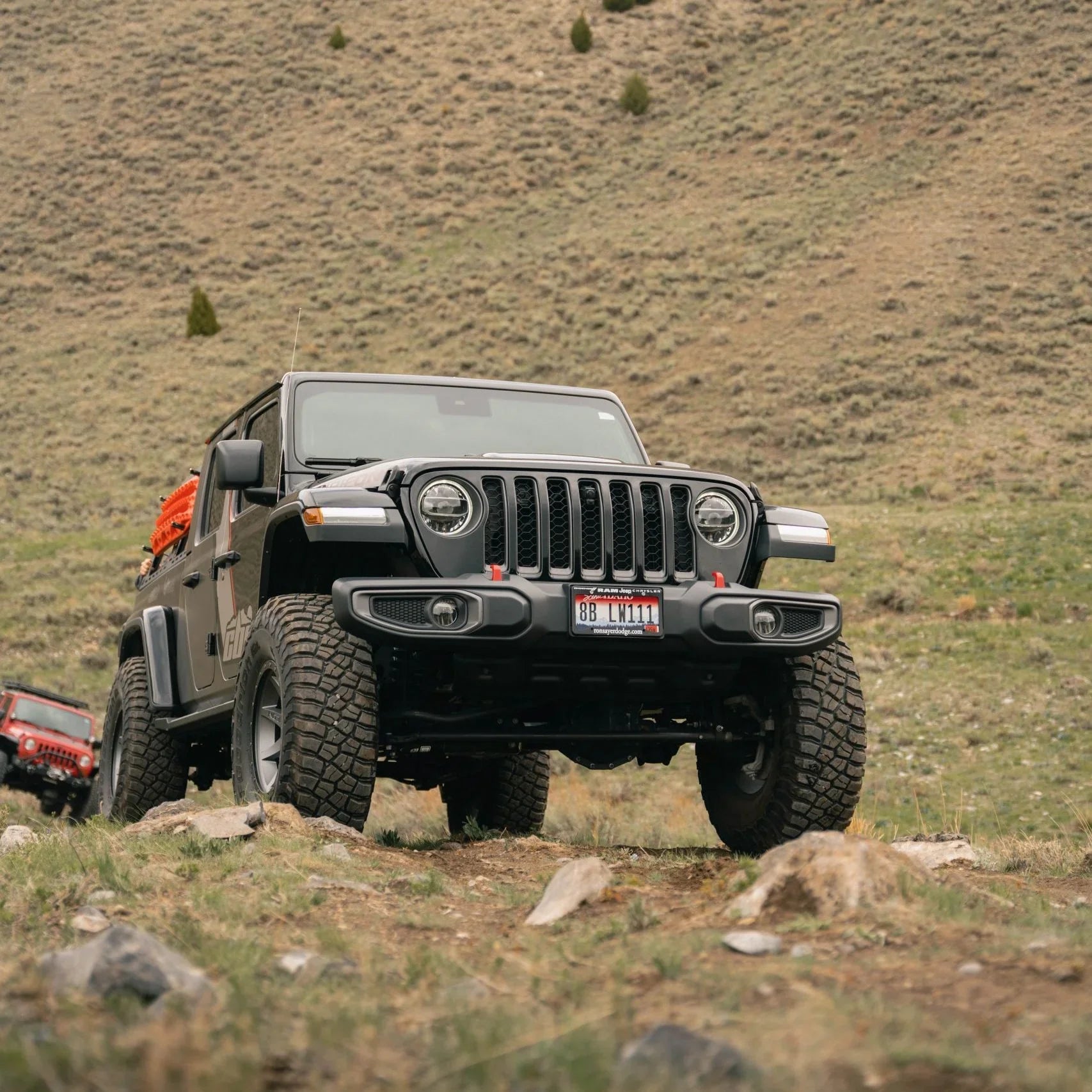
Solid front axles, like a Wrangler or Gladiator, avoid the CV problem but bring their own checklist: track bar position, driveshaft angles, bump stops and brake line length.
Every leveling or lift kit needs an alignment afterward. ReadyLIFT's product pages say to expect one at extra cost, and on IFS toe changes with ride height, which can wear out new tires fast. ICON lists ADAS recalibration as required after installing its Raptor collar and 4Runner coilovers, and the Raptor kit also needs ride-height sensor recalibration. Re-aim your headlights too.
Warranties
First, the kit maker's warranty. ICON lists a lifetime warranty on components, springs and weldments, with shocks covered for defects for 12 months. ReadyLIFT replaces broken parts for the original buyer, limits wear items like shocks, ball joints and bushings to one year, and excludes off-road abuse on most kits. Read the terms on our vendor warranty policies page.
Second, your vehicle's factory warranty. A kit can complicate a claim on related parts like CV axles, ball joints or wheel bearings. Ask your dealer how they handle modified trucks before you install, keep receipts and alignment printouts, and check your state's rules if a claim is denied.
Mistakes to avoid
- Cranking preload for height. It can top out the factory shock and make the ride choppy. A top spacer or a coilover is the better route.
- Leveling past what IFS likes. Past about 2 inches on many IFS trucks, plan for upper control arms and possibly a diff drop or CV axles.
- Skipping the alignment or ADAS recalibration. Neither is optional when the maker calls for it.
- Buying tires before checking fit. Offset matters as much as lift. Start from the kit's listed wheel and tire combination.
- Ignoring trim notes. ReadyLIFT's Ram 1500 kit doesn't fit air-suspension trucks, TRX, RHO or factory-leveled off-road packages, and ICON's Tundra spacer won't fit TRD Pro models.
When to step up to coilovers and upper control arms
A spacer keeps your factory shocks, so it's only as good as those shocks at the new height. Step up to coilovers when you want more lift than a spacer comfortably gives, when you drive washboard or rough trails often, or when bumpers, a winch, a rack and gear have added a lot of weight. Height-adjustable coilovers, like ICON's 2025 and newer 4Runner kit with 1.25 to 3 inches of range, let you set ride height instead of picking one spacer thickness.
Add upper control arms when the lift exceeds what the factory adjusters can correct, when the coilover maker recommends them for your height, or when you want more travel without the upper ball joint binding.
Quick guide: level stance and one tire size up, choose a leveling kit. Weekend trails on 33 to 35 inch tires, choose a mid lift or entry system. Heavy builds and serious off-road use, choose a full system with coilovers and upper arms.
What NVMOS carries
We stock leveling kits, spacer lifts and full suspension systems from ReadyLIFT, ICON Vehicle Dynamics, Coachbuilder by Ekstrom Design, TeraFlex, Clayton Off Road, Fishbone Offroad, Colorado & Canyon Enthusiasts and Dobinsons. A few representative parts:
- ReadyLIFT 1.5" Leveling Kit, Chevy Silverado / GMC Sierra 1500 2019-2026
- ReadyLIFT 2" Front Leveling Kit With Tubular Control Arms, Ram 1500 4WD 2019-2026
- ReadyLIFT 3" SST Lift Kit, 2022-2026 Toyota Tundra Rear Air
- ReadyLIFT 4" Rear Block Kit, Ford F-150
- ICON 2007-2021 Toyota Tundra / 2008-2022 Sequoia 2.5" Coilover Spacer Kit
- ICON 2021-2025 Ford F-150 Raptor Attitude Adjustment Collar Leveling Kit
- ICON 2025-2026 Toyota 4Runner 2WD 1.25-3" 2.5 Series Coilover Kit
- Coachbuilder Strut/Coilover Shim, Tacoma, 4Runner and FJ Cruiser 2005-2023
- Coachbuilder TRD Pro Kit for Toyota Tundra TRD Pro
- Fishbone Offroad Leveling Kit, 2007-2021 Toyota Tundra
- TeraFlex JL 4-Door 1.5" Performance Spacer Lift Kit
- Clayton Off Road Jeep Wrangler 1.5" Ride Right Lift Kit, 2018+ JL
Browse leveling kits, all lift kits, or by height: 0 to 2 inch, 2.5 inch and 3 to 3.5 inch. Toyota owners can jump to Tacoma, 4Runner or Tundra lift kits. For the next step, see coilover kits, control arms and body lift kits. Check current lead times and every brand we carry. In-stock parts ship in 24 to 48 hours.
Shop leveling kits → Shop lift kits → Shop by vehicle →
Frequently asked questions
Is a leveling kit or lift kit better?
Neither is better in general. A leveling kit is the simpler choice for a level stance and one tire size up. A lift kit makes more sense if you want clearance at both ends, larger tires or better off-road suspension.
Does a leveling kit affect ride quality?
A top spacer that doesn't add preload usually rides close to stock. Preload collars can stiffen it. Larger E-load tires often change the ride more than the kit does.
Do you need an alignment after a leveling kit?
Yes. Changing front ride height changes the alignment, especially toe on independent front suspension. Some newer trucks also need ADAS recalibration, and the headlights should be re-aimed.
What size tires can I fit with a leveling kit?
It depends on the truck, wheel and offset. ReadyLIFT lists a 33x11.50-20 for its 1.5 inch Silverado 1500 kit and a 285/65-20 for its 2 inch Ram 1500 kit. Check the listing for your exact vehicle.
Is a leveling kit bad for CV axles?
Leveling an IFS 4WD truck steepens the CV angle, which adds wear. Modest leveling within the maker's limits is common. Bigger lifts often need a differential drop or high-angle CV axles.
When do I need upper control arms?
When the lift goes beyond what the factory alignment adjusters can correct, or when the kit maker recommends them. ICON recommends upper arms above 2 inches on its 2025 and newer 4Runner coilovers.
Will a leveling kit void my truck's warranty?
It can complicate a factory warranty claim on related parts like CV axles and ball joints. Ask your dealer before installing, keep receipts and alignment records, and check your state's rules if a claim is denied.
Does a body lift add ground clearance?
No. A body lift raises the body off the frame, which makes room for bigger tires, but the frame, axles and differentials stay at the same height. Taller tires or a suspension lift do that.
Not sure whether your truck needs a level, a lift or a full system? Call a real person at (920) 249-7744 or reach us through our contact page.
